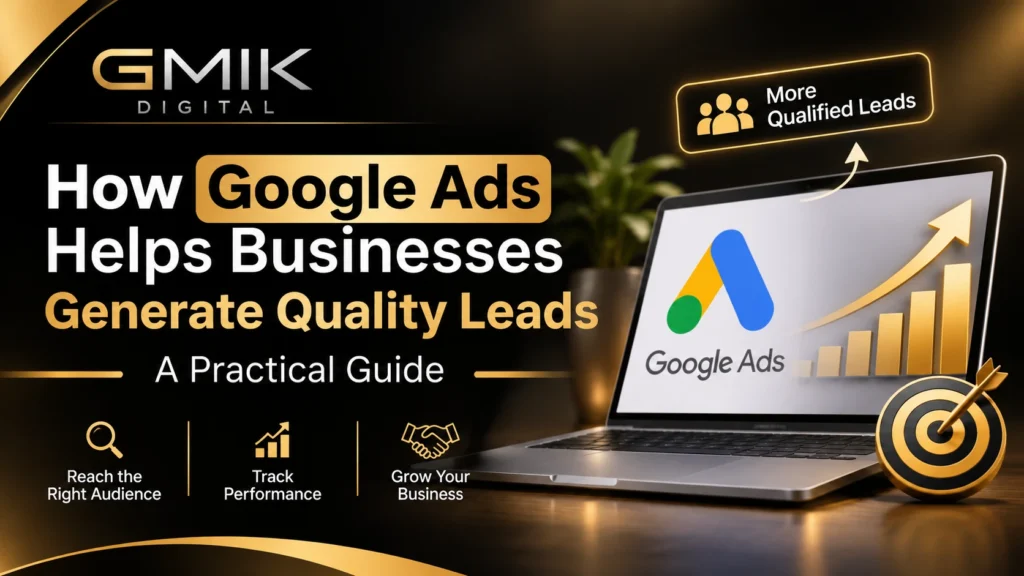
Every business wants to reach potential customers who are genuinely interested in its products or services. However, getting the right audience to notice your business can be challenging. This is where Google Ads becomes a useful digital advertising platform.
With the right campaign strategy, businesses can connect with people who are actively searching for their services. But simply running advertisements is not enough. Proper targeting, conversion tracking and continuous optimisation are important for achieving meaningful results.
In this guide, we will explore how Google Ads works, how it helps generate quality leads and why businesses need a result-focused advertising strategy.
What Is Google Ads and How Does It Work?
Businesses looking for professional advertising support can explore our Google Ads services to reach relevant audiences and generate quality leads.
Google Ads is an online advertising platform that allows businesses to promote their products and services across Google Search, YouTube, Display and other advertising placements.
For example, imagine someone searching for a website development company. A business running a relevant Google Search campaign may appear among the sponsored search results.
Advertisers can choose relevant keywords, create advertisements, set budgets and direct interested users to their websites or landing pages.
Google Ads uses an auction system to determine which advertisements are eligible to appear and where they may be displayed. Factors such as bids, ad quality and relevance influence the outcome.
How Google Ads Helps Generate Quality Leads
Generating leads is not just about getting more clicks. Businesses need enquiries from people who are genuinely interested in their offerings.
Here are some ways Google Ads can support lead generation.
1. Reach People Actively Searching for Your Services
One of the major advantages of Google Search Ads is the ability to connect with people based on their search intent.
For example, someone searching for a Google Ads agency may already be considering professional advertising support. Showing a relevant advertisement can help your business reach that potential customer.
2. Target Relevant Keywords and Audiences
Keyword selection plays an important role in campaign performance. Businesses should focus on search terms that match their services and customer requirements.
Negative keywords can also help prevent advertisements from appearing for irrelevant searches.
The goal is to attract relevant visitors instead of spending the budget on unnecessary clicks.
3. Create Relevant Advertisements and Landing Pages
Your advertisement should clearly explain what your business offers and why someone should choose your service.
However, the customer journey does not end with an ad click. The landing page should provide relevant information, build trust and make it easy for visitors to enquire.
A clear call to action, useful content and a mobile-friendly design can improve the overall experience.
4. Track Conversions and Measure Results
Conversion tracking helps businesses understand which advertising interactions lead to valuable actions, such as form submissions, phone calls or purchases.
Instead of focusing only on clicks and impressions, advertisers can evaluate campaign performance using meaningful conversion data.
Why Businesses Need a Performance Marketing Agency
Apart from search advertising, businesses can also use Facebook and Instagram advertising to reach potential customers and generate enquiries.
Running Google Ads requires more than creating advertisements and setting a daily budget. Businesses also need proper planning, campaign management and regular analysis.
A professional performance marketing agency can help businesses develop a structured advertising strategy.
Some important areas include:
- Campaign Strategy: Selecting suitable campaign types and defining clear advertising goals.
- Keyword Research: Identifying relevant search terms based on customer intent.
- Ad Optimisation: Improving advertisement relevance, messaging and performance.
- Conversion Tracking: Measuring enquiries, calls and other important actions.
- Performance Analysis: Reviewing campaign data and identifying improvement opportunities.
A good agency should focus not only on generating leads but also on understanding their quality and relevance to business goals.
Important Google Ads Metrics to Monitor
Measuring campaign performance helps businesses make informed decisions.
Some important metrics include:
- CTR (Click-Through Rate): The percentage of impressions that result in clicks.
- CPC (Cost Per Click): The average cost paid for each click.
- CPL (Cost Per Lead): The average advertising cost of generating a lead.
- Conversion Rate: The percentage of visitors who complete a desired action.
- CPA (Cost Per Acquisition): The average cost of achieving a defined acquisition or conversion.
These metrics should be evaluated according to campaign objectives. For lead generation, enquiry quality is just as important as the number of leads.
Common Google Ads Mistakes Businesses Should Avoid
Even a well-funded campaign can underperform if important details are ignored.
Avoid these common mistakes:
- Targeting broad or irrelevant keywords.
- Sending advertisement traffic to unrelated landing pages.
- Ignoring conversion tracking.
- Not reviewing search terms and negative keywords.
- Judging campaign success only by clicks instead of meaningful enquiries.
Regular monitoring and data-based improvements can help businesses use their advertising budgets more effectively.
Frequently Asked Questions (FAQs)
1. Is Google Ads suitable for small businesses?
Yes. Small businesses can use Google Ads with a controlled budget and target relevant searches. Results depend on competition, campaign strategy, offer and website experience.
2. How long does Google Ads take to generate leads?
There is no fixed timeline. Some campaigns may receive enquiries soon after launch, while others require testing, optimisation and sufficient conversion data.
3. What is the difference between Google Ads and SEO?
Google Ads provides paid advertising placements, while SEO focuses on improving a website’s visibility in organic search results. Both can support a business’s online growth.
4. Why are Google Ads generating clicks but not leads?
Possible reasons include irrelevant keywords, weak advertisements, poor landing page experience, unclear offers or conversion tracking issues. Reviewing the complete customer journey can help identify the problem.
5. Why hire a performance marketing agency for Google Ads?
A performance marketing agency can help with campaign planning, keyword research, ad optimisation, conversion tracking and performance analysis. This allows businesses to make more informed advertising decisions.
Conclusion
Google Ads can help businesses connect with potential customers who are actively searching for relevant products and services. However, successful advertising requires the right keywords, relevant advertisements, effective landing pages and accurate conversion tracking.
At GMIK Digital, we focus on Google Ads and Meta Ads strategies that help businesses reach relevant audiences and generate meaningful enquiries. If you want to improve your advertising approach, connect with our team to discuss your business goals.
Official Resources & Further Reading
- Google Ads Help Centre – Learn more about creating and managing Google Ads campaigns.
- Google Ads Conversion Tracking – Understand how to measure valuable customer actions from your advertisements.